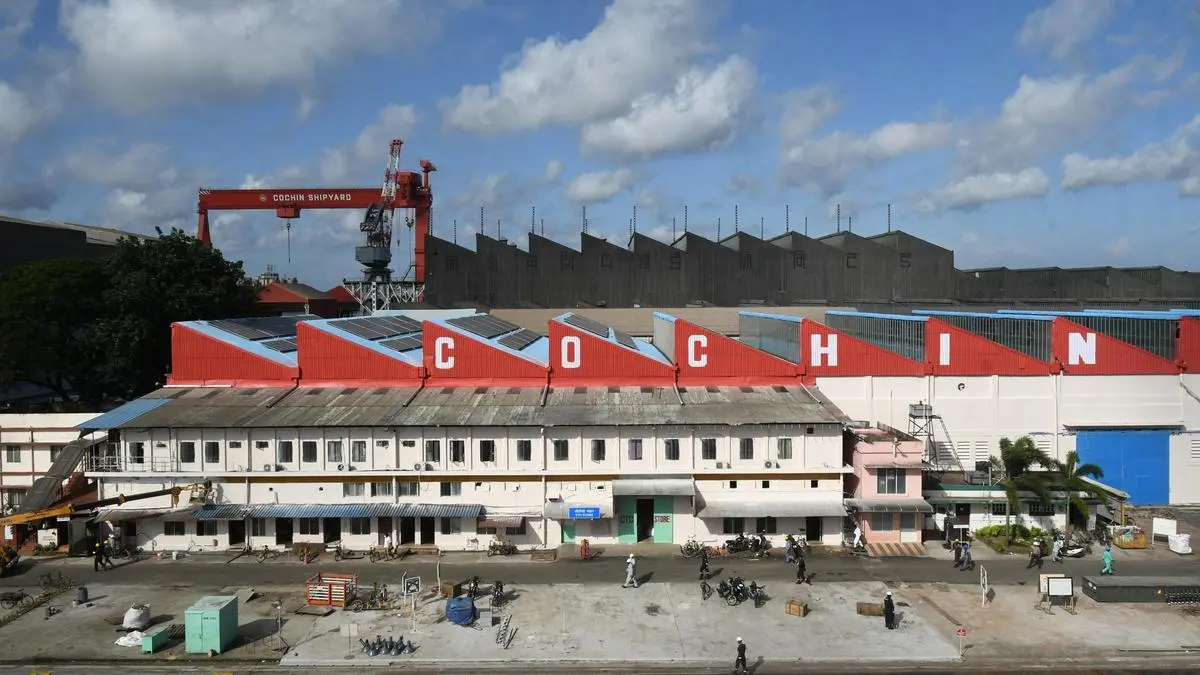
Cochin Shipyard Share Price Drops as Government OFS Opens: Key Details, Floor Price, and What Investors Should Do
07 Jul 2026
Cochin Shipyard Share Price Drops as Government OFS Opens: Key Details, Floor Price, and What Investors Should Do
Shares of Cochin Shipyard Ltd (CSL) witnessed heavy selling pressure in early trade on Tuesday, dropping over 4% to hit an intraday low. This sharp decline came on the heels of the Indian government’s announcement of an Offer for Sale (OFS) to divest a portion of its stake in the state-owned defense PSU. The government set the floor price for the OFS at a notable discount to the previous day's closing price, triggering a swift adjustment in the open market.
For Indian stock market investors, public sector undertaking (PSU) disinvestments often present unique buying opportunities, but they also introduce short-term volatility. Here is a comprehensive breakdown of the Cochin Shipyard OFS, the market's reaction, the financial details, and what this means for retail and institutional investors alike.
The Immediate Market Reaction: CSL Shares Under Pressure
On Tuesday morning, Cochin Shipyard shares opened at ₹1,451.20, down from Monday's closing price of ₹1,506.40. By 9:47 AM, the stock had slid 4.19 per cent to trade at ₹1,443.30. During the initial hour of trading, the stock touched an intraday low of ₹1,437.50.
The sell-off was accompanied by massive trading volumes. Within the first hour, market participants traded 14.53 lakh shares, translating to a total transaction value of ₹210.55 crore. The order book clearly reflected a bearish sentiment, with sell orders dominating the market. Sell orders accounted for 59.29 per cent of the total traded quantity, while buy orders lagged at 40.71 per cent.
---Understanding the Cochin Shipyard OFS Structure
The Offer for Sale was initiated by the Ministry of Ports, Shipping and Waterways, acting on behalf of the President of India. An OFS is a transparent, exchange-based mechanism that allows promoters of listed companies to dilute their holdings. Here are the key structural details of the CSL disinvestment:
- Base Offer Size: The government proposed to sell 2.52 per cent of the company’s paid-up equity capital, which equates to 66.29 lakh shares.
- Oversubscription Option (Green Shoe): The OFS includes an equal oversubscription option of 2.52 per cent. If fully exercised, the total dilution of the government's stake will reach 5.04 per cent of the company's paid-up equity.
- The Floor Price: The minimum price at which investors can bid was set at ₹1,400 per share. This floor price represented a discount of approximately 7 per cent compared to Monday's closing price of ₹1,506.40.
- Discount Policy: Unlike some previous PSU disinvestments, the government decided not to offer any additional discounts for retail investors or company employees.
Bidding Timeline: Non-Retail vs. Retail Investors
The Cochin Shipyard OFS is structured over a two-day bidding window to accommodate different classes of market participants:
- Day 1 (Tuesday): Non-Retail Investors
The OFS opened on Tuesday exclusively for institutional and non-retail bidders (such as mutual funds, foreign portfolio investors, and corporate entities) to submit their bids. - Day 2 (Wednesday, July 8): Retail Investors
Retail individual investors—those bidding for shares worth a total value of less than ₹2 lakh—are permitted to place their bids on Wednesday, July 8.
Why Did the Stock Fall? The Mechanics of an OFS Discount
It is common for a company's share price to drop immediately after an OFS is announced. There are two primary reasons for this market behavior:
1. Arbitrage and Floor Price Discount
When the government sets a floor price that is 7% lower than the prevailing market price, institutional investors have an incentive to sell their existing shares in the open market and bid for cheaper shares through the OFS window. This arbitrage activity naturally drives down the open-market price toward the floor price of ₹1,400.
2. Equity Dilution and Near-Term Supply
An OFS increases the immediate supply of floating stock in the market. With up to 5.04% of additional equity potentially entering the secondary market, the short-term demand-supply balance is disrupted. Recognizing this temporary imbalance, domestic brokerage firm SBI Securities flagged the OFS as a near-term negative factor for the stock, which further fueled the morning sell-off.
---Cochin Shipyard's Historical Performance Context
To evaluate whether this drop is a buying opportunity or a warning sign, it is essential to look at Cochin Shipyard's recent market performance. The stock has been going through a prolonged period of consolidation and correction:
- One-Year Return: The stock has declined nearly 30 per cent over the past year.
- Year-to-Date (YTD) Performance: CSL is down over 11 per cent since the beginning of the calendar year.
- Comparison with Benchmark: This weakness stands in stark contrast to the broader PSU sector. The Nifty CPSE Index (which tracks major central public sector enterprises) gained nearly 5 per cent over the same period, highlighting Cochin Shipyard's relative underperformance.
- Peak Valuation: The stock's 52-week high stands at ₹2,186, a milestone hit in June 2025. At current levels, the stock is trading at a significant discount of roughly 34% from its peak.
What Should Retail Investors Do?
For retail investors looking at Cochin Shipyard, the OFS presents a classic dilemma. On one hand, the company is one of India's premier shipbuilding and ship-repair facilities, playing a vital role in India's defense manufacturing and commercial maritime ambitions. On the other hand, the stock's recent technical weakness and the lack of a retail discount make it less attractive in the immediate term.
Key Considerations:
- Long-Term Fundamentals: Cochin Shipyard boasts a robust order book, backed by government defense contracts, including indigenous aircraft carriers and naval vessels. If you believe in the long-term "Make in India" defense narrative, acquiring shares near the floor price of ₹1,400 could be a viable entry point.
- Technical Weakness: The stock is in a clear downtrend, underperforming its peer CPSE index. Investors should be prepared for potential short-term volatility as the market absorbs the newly diluted shares.
- Bidding Strategy: Since there is no retail discount, retail investors bidding on Wednesday should carefully monitor the demand from institutional investors on Tuesday. A high subscription rate from non-retail buyers usually indicates strong institutional backing, which can act as a cushion for the stock price.
Frequently Asked Questions (FAQs)
1. What is the floor price for the Cochin Shipyard OFS?
The government has set the floor price for the Cochin Shipyard Offer for Sale (OFS) at ₹1,400 per share, which is a discount of approximately 7% to Monday's closing price of ₹1,506.40.
2. When can retail investors bid for the Cochin Shipyard OFS?
Retail investors can place their bids on Wednesday, July 8. The first day of the OFS (Tuesday) was reserved exclusively for non-retail and institutional investors.
3. Is there a discount for retail investors in this OFS?
No, the Ministry of Ports, Shipping and Waterways has announced that there will be no special retail or employee discounts for this Offer for Sale.
4. How much stake is the government selling in Cochin Shipyard?
The base offer size is 2.52 per cent of the company's paid-up equity capital (66.29 lakh shares). However, there is an equal oversubscription option of 2.52 per cent, which brings the total potential dilution to 5.04 per cent.
5. Why did Cochin Shipyard's share price drop after the OFS announcement?
The share price dropped because the OFS floor price (₹1,400) was set below the market price, encouraging arbitrage selling. Additionally, the influx of up to 5.04% of new shares into the market creates short-term supply pressure, which brokerages like SBI Securities flagged as a near-term negative.
6. What is Cochin Shipyard's 52-week high?
Cochin Shipyard's 52-week high is ₹2,186, which was achieved in June 2025.
7. How has Cochin Shipyard stock performed compared to other PSUs?
Cochin Shipyard has underperformed the broader PSU market recently. While the Nifty CPSE index gained nearly 5%, CSL stock fell by over 11% year-to-date and is down nearly 30% over the past year.




Comments
Join the discussion. First-time comments are reviewed before publishing.
No approved comments yet.